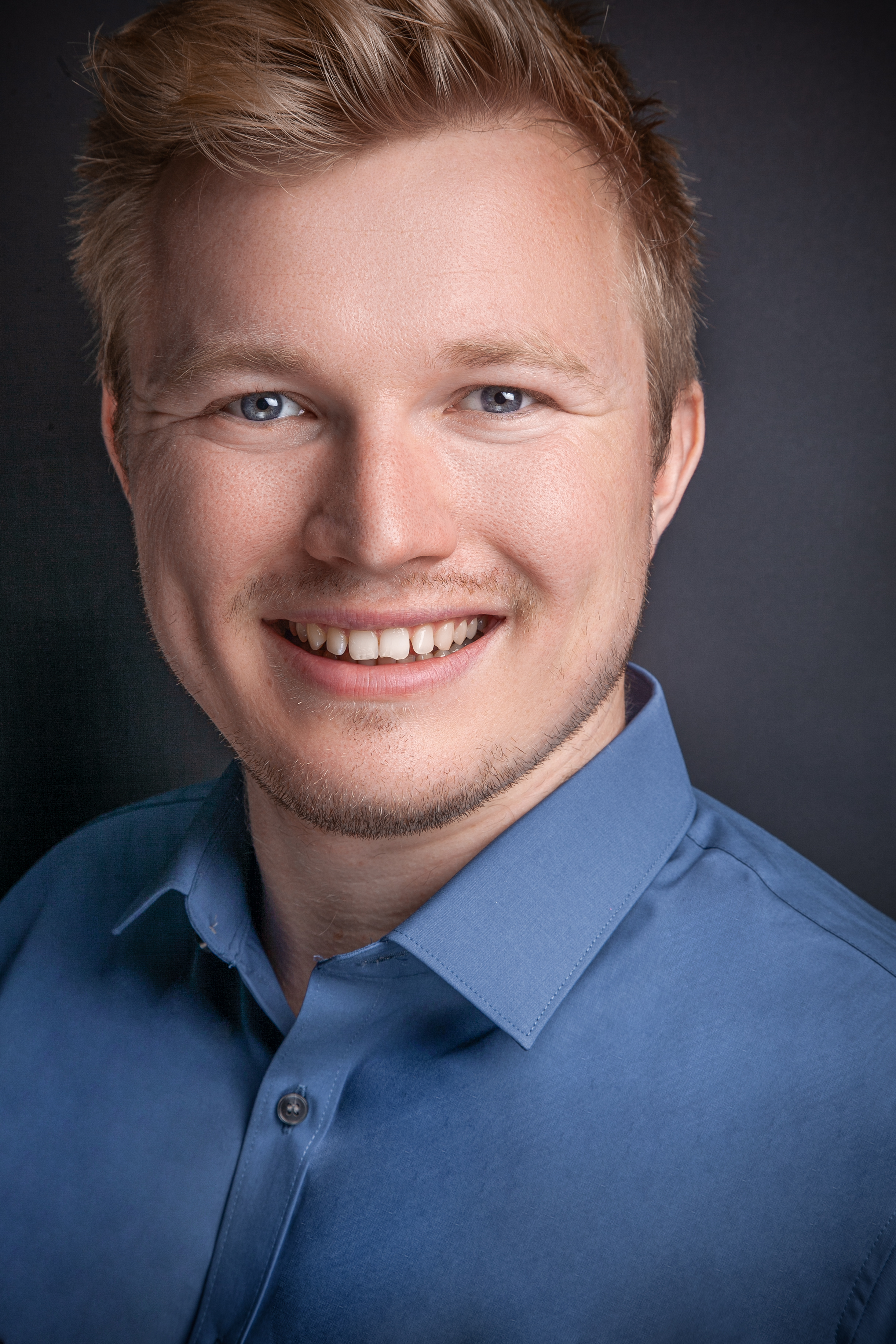
About Me

Education:
Ph.D. in Astrophysics, University of Bonn, Germany (2022)
Argelander-Institut für Astronomie
Dissertation: "Higher-order statistics in cosmic shear"
M.Sc. in Astrophysics, University of Bonn, Germany
M.Sc. in Mathematics, University of Münster, Germany
B.Sc. in Mathematics, University of Münster, Germany
Research Interests:
My research focuses on AI interpretability through the lens of geometry and topology. I believe that understanding how complex neural networks process information is a crucial task for this decade. I also think that the models are far too complex to be fully understood through the lens of mechanistic interpretability. Mathematics has an established track record of providing tools to abstract complex problems and view them through a simpler lens. I am seeking these mathematical abstractions that can help us to interpret and quantify the inner workings of neural networks. I apply tools from algebraic topology (persistent and zigzag homology, sheaf cohomology) to neural-network representations and weights, in order to understand how models organize information internally. I am also interested in singular learning theory (SLT) and its algebraic-geometric perspective on how neural networks learn and generalize; especially how it intersects with information theory. Before moving into AI research, I worked in observational cosmology, where I pioneered the use of persistent homology for cosmological inference and developed advanced statistical methods for weak gravitational lensing surveys.
Current Role:
I am a postdoctoral researcher in AI interpretability at Area Science Park in Trieste, Italy, working in the group of Dr. Matteo Biagetti. My work there combines topological deep learning with the analysis of large language models, for example, using zigzag persistence on token-level embedding trajectories to analyze model performance and detect prompt injections. Previously, I was a Postdoctoral Research Scholar in cosmology at UC Santa Cruz, where I chaired the DESI-Lensing working group, combining DESI data with weak gravitational lensing measurements.
Research

Topology and Geometry for AI Interpretability
At Area Science Park, I study the internal representations of neural networks with geometric and topological tools. This includes applying zigzag persistence to token-level embedding trajectories of large language and vision models and exploring sheaf cohomology as a principled framework for interpretability. I am also interested in applying Singular Learning Theory to better understand how complex ML models process information and generalize.
Topological Deep Learning
I develop methods that combine topological data analysis with deep learning. In the TopoFisher framework, we learn topological summary statistics by maximizing Fisher information, turning persistent homology from a fixed descriptor into a trainable component of machine learning pipelines.
Topological Data Analysis in Cosmology
During my Ph.D., I developed persistent-homology pipelines for cosmological inference, which yielded the first cosmological parameter constraints ever derived from persistent homology. This line of work demonstrated that topological statistics can extract non-Gaussian information from weak lensing data that standard two-point statistics miss.
Multi-Probe Cosmology
As a postdoc at UC Santa Cruz, I chaired the DESI-Lensing working group, coordinating the key-project analysis that combines DESI spectroscopic data with weak gravitational lensing surveys. This work probes the evolution of dark energy, the "lensing is low" effect, and the S8 tension, and continues to inform my methodological research.
Publications

TopoFisher: Learning Topological Summary Statistics by Maximizing Fisher Information
Biagetti, M., Carrière, M., Conti, F., Ferrari, E. M., Heydenreich, S., Viswanathan, K.
Submitted (2026) — arXiv:2605.07720
Persistent homology in cosmic shear. II. A tomographic analysis of DES-Y1
Heydenreich, S., Brück, B., Burger, P., Harnois-Déraps, J., et al.
The first cosmological parameter constraints derived from persistent homology.
A&A 667, A125 (2022) — arXiv:2204.11831
Persistent homology in cosmic shear: Constraining parameters with topological data analysis
Heydenreich, S., Brück, B., Harnois-Déraps, J.
A&A 648, A74 (2021) — arXiv:2007.13724
Can dynamic dark energy explain the S8 tension, the 'lensing is low' effect, or strong baryon feedback?
Heydenreich, S., Leauthaud, A., DeRose, J.
Submitted (2025) — arXiv:2508.05746
Lensing Without Borders: Galaxy-galaxy lensing and projected galaxy clustering in DESI DR1
Heydenreich, S., Leauthaud, A., Blake, C., Sun, Z., Lange, J. U., et al.
Submitted (2025) — arXiv:2506.21677
Full Publication List: NASA ADS
Outreach

I am passionate about sharing the wonders of scientific research with the public and have been actively engaged in astronomy outreach (see below). Science communication and outreach are essential for connecting our research with society and inspiring the next generation of scientists. I plan to continue my outreach efforts in the field of AI interpretability, once I have established a strong research program in this area. I believe that AI interpretability is a topic of great societal importance, and I am committed to making it accessible and engaging for diverse audiences.
Stars over Streetlights
During my time at UC Santa Cruz, I was an active member of Stars over Streetlights, an organization dedicated to raising awareness about light pollution and its effects on astronomy and the environment. Our mission focused on elementary school students and minority communities, hosting astronomy talks that introduce concepts of light pollution and its connection to astronomical observations. The group received recognition through a Research!America microgrant for our project "Lighting Up Minds, Dimming the Skies," where we gave talks at elementary schools in Santa Cruz County to educate students about light pollution and its impacts.
Astronomy on Tap
I have participated in Astronomy on Tap events, a global network where professional astronomers give informal science talks in local bars and breweries. These events feature accessible presentations on space and science topics, from planets to black holes to cosmology, accompanied by trivia, games, and direct interaction with the public. The format makes astronomy approachable and fun, creating opportunities for meaningful conversations about science in casual settings.
Astroclub Bonn
During my time in Germany, I was involved with outreach activities through the Astroclub Bonn, contributing to public astronomy events and educational programs that brought university-level astronomy research to local communities. This experience helped me develop skills in communicating complex scientific concepts to diverse audiences.
Public Engagement Philosophy:
I believe that astronomy serves as a "gateway science" that can spark curiosity about all STEM fields. My outreach approach focuses on showing how even in light-polluted urban areas, there are still amazing astronomical phenomena to observe and appreciate. Through these efforts, I aim to demonstrate that science is accessible to everyone and that researchers care deeply about their communities.
Contact
Email: sven.carl.heydenreich[at]areasciencepark[dot]it
Address:
LADE, Area Science Park
Padriciano 99
34149 Trieste
Italy